
Brushing With Braces: How to Keep Teeth Clean (Without the Drama)
Posted by Emily Crisp on 3rd May 2026
Brushing With Braces: How to Keep Teeth Clean (Without the Drama)
Braces are brilliant at moving teeth. They are not so brilliant at staying clean on their own.
Brackets and wires create extra surfaces, edges and tiny spaces where food and plaque can settle. What used to be a simple sweep of the toothbrush now requires a little more patience and a bit more intention. If plaque is not removed properly around brackets, it can build up quickly, increasing the risk of gum inflammation and those chalky white marks that sometimes appear after braces come off.
Those marks are called white spot lesions. They are areas where enamel has begun to demineralise due to plaque sitting on the tooth surface for too long. The good news is they are preventable. Consistent, thorough cleaning is what makes the difference.
When brushing with braces, technique matters more than ever. Instead of brushing straight across the teeth, angle the brush at about 45 degrees toward the gum line and clean above the brackets first. Then angle downward to clean underneath the brackets and around the wire. Small, controlled movements are far more effective than fast scrubbing. Each tooth deserves attention from multiple angles to ensure plaque is not hiding around the edges of the brackets.
This is where sonic brushing can be particularly helpful. The high frequency movements of a sonic toothbrush help disrupt plaque around the brackets and along the gum line without requiring aggressive pressure. A brush like Brush Go supports a more thorough clean by allowing the bristles to reach into small areas that are harder to access with manual brushing alone.
Brushing is only part of the equation. Interdental brushes are extremely useful for cleaning between brackets and under wires where a regular brush cannot reach. Floss threaders can help guide floss beneath the arch wire so you can still clean between teeth properly. It may take a little longer than it used to, but it is worth it to prevent long term enamel changes.
A consistent routine makes everything easier. In the morning, brush thoroughly around each bracket, clean between teeth where possible and rinse before heading out. At night, take a little more time. Brush methodically, use interdental brushes to remove trapped debris and floss carefully. Finishing with water or an alcohol free mouthwash can help remove any remaining particles.
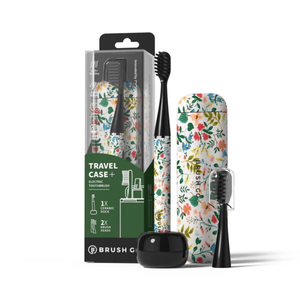
Because braces mean brushing more often, especially after meals, convenience becomes important. Being able to freshen up at school, university or work helps prevent food sitting around brackets for hours. Brush Go's compact, travel friendly design makes it easy to keep in a backpack or handbag, so maintaining your routine does not depend on being at home. For braces wearers, pairing it with the OrthoCare replacement head makes cleaning around brackets and wires even more effective.
Braces require commitment, but they do not need to come with constant stress. With the right technique, a few supportive tools and a consistent routine, keeping teeth clean during orthodontic treatment becomes manageable.
The brackets are temporary. The health of your enamel is long term.
Braces are brilliant at moving teeth. They are not so brilliant at staying clean on their own.
Brackets and wires create extra surfaces, edges and tiny spaces where food and plaque can settle. What used to be a simple sweep of the toothbrush now requires a little more patience and a bit more intention. If plaque is not removed properly around brackets, it can build up quickly, increasing the risk of gum inflammation and those chalky white marks that sometimes appear after braces come off.
Those marks are called white spot lesions. They are areas where enamel has begun to demineralise due to plaque sitting on the tooth surface for too long. The good news is they are preventable. Consistent, thorough cleaning is what makes the difference.
When brushing with braces, technique matters more than ever. Instead of brushing straight across the teeth, angle the brush at about 45 degrees toward the gum line and clean above the brackets first. Then angle downward to clean underneath the brackets and around the wire. Small, controlled movements are far more effective than fast scrubbing. Each tooth deserves attention from multiple angles to ensure plaque is not hiding around the edges of the brackets.
This is where sonic brushing can be particularly helpful. The high frequency movements of a sonic toothbrush help disrupt plaque around the brackets and along the gum line without requiring aggressive pressure. A brush like Brush Go supports a more thorough clean by allowing the bristles to reach into small areas that are harder to access with manual brushing alone.
Brushing is only part of the equation. Interdental brushes are extremely useful for cleaning between brackets and under wires where a regular brush cannot reach. Floss threaders can help guide floss beneath the arch wire so you can still clean between teeth properly. It may take a little longer than it used to, but it is worth it to prevent long term enamel changes.
A consistent routine makes everything easier. In the morning, brush thoroughly around each bracket, clean between teeth where possible and rinse before heading out. At night, take a little more time. Brush methodically, use interdental brushes to remove trapped debris and floss carefully. Finishing with water or an alcohol free mouthwash can help remove any remaining particles.
Because braces mean brushing more often, especially after meals, convenience becomes important. Being able to freshen up at school, university or work helps prevent food sitting around brackets for hours. Brush Go's compact, travel friendly design makes it easy to keep in a backpack or handbag, so maintaining your routine does not depend on being at home.
Braces require commitment, but they do not need to come with constant stress. With the right technique, a few supportive tools and a consistent routine, keeping teeth clean during orthodontic treatment becomes manageable.
The brackets are temporary. The health of your enamel is long term.
Recommended for braces